 Florida's Film, Television and the Arts Magazine



The Odyssey for a Modern World
One of the earliest known cases of adaptation was the oral tradition of poetry. Epics like the Odyssey and the Iliad were presented in the form of constantly evolving smaller chapters. Some chapters were forgotten or expanded upon based on audience response. As far as Homer goes, the consensus is that he was an amalgamation of poets and scribes, who most likely not all at once, put down these tails on rolls of papyrus that were copied and passed down from generation to generation. It is understood that the original text of the Odyssey was written by the 6th century BC. The oldest available copy of the Odyssey dates back to the 3rd century AD in the form of the Manchester Odyssey, which puts at least 700 years between the initial writing of the text and the oldest existing Egyptian manuscript available today. Even beyond the constantly evolving oral presentation of the material, that is 700 undocumented years ripe for reinterpretation. Today’s world is also quite different from 6th century BC with modern technology — see Oppenheimer changing warfare, a radically different moral compass, and globalized communication. Society is bigger than just the Mediterranean, and Nolan looks to turn the Odyssey into an examination of the terrors brought on by a lack of decorum and respect for humanity.
The Odyssey presents a naturalistic world where deities exist on the periphery of his overwhelming images, where women have just a tad bit more agency, and perhaps the most famous hero to ever exist is pathologized. Nolan’s approach is modern and unique from the source text. There is much to be made of Emily Wilson’s outsized reaction to Nolan’s adaptation because there is a definitive difference between the art of translation and adaptation which Wilson declines to engage with. Both require active choices to be made, but translation requires a much more literal approach to the material. As far as page to screen adaptations go, the two times Paul Thomas Anderson has turned Thomas Pynchon novels into films are functional examples of that difference. Inherent Vice is about as close as you can get to an on-screen translation of a text. Of course, Anderson makes unique choices in his film like cutting out the Las Vegas sequence entirely, but that film is a literal and beautiful representation of the page. One Battle After Another is a loose adaptation of Pynchon’s Vineland, one of the great American novels. Anderson modernizes that text, transposing it from the 1960s-80s where Richard Nixon and Ronald Reagan exist as twinned demons from hell into the modern age where ICE encampments and militarized strike teams are the face of corporate cabals. The character arcs and thematic ideas of both the Pynchon novel and Anderson’s film track but with significantly different texture and context. The general public’s response to Inherent Vice was one of alienation because Pynchon’s pros and Anderson’s translation of them are alienating whereas One Battle After Another grounding the audience in modernity, and a more familiar narrative structure is a warm greeting. Nolan’s adaptation finds itself in between those polar opposite approaches, adapting the literal events of the Odyssey to a relatively faithful degree while evolving the themes and ideas to reflect today’s world. This is all to say that in the case of The Odyssey, approaching the film through the lens of being a direct adaptation of the original story’s themes and mechanics is a fool’s errand because the intrigue lies in Nolan’s interest in modernity.
I went long on One Battle After Another as a piece of adaptation here.
The Odyssey via Nolan is profound because of the additional oddities and textures brought on by the hand of a legitimate artist putting his influence on such a historically relevant and present text. The film reads much cleaner from the perspective of a Catholic experiencing guilt for the original sin than a man of Pagan faith. Zeus’ Law is the all encompassing phrase that Nolan uses to describe societal rules, particularly pertaining to hospitality and greeting strangers. Guests should be treated with kindness and fed. “Treat people how you want to be treated.” as Penelope (Anne Hathaway) says within the film. The suitors in Ithaca and the mysterious sea people pillaging and raping are presented as the primary source of evil, tarnish Zeus’ Law, as the audience awaits Odysseus’ (Matt Damon) return home and ultimate massacre of the miscreants. The film condenses an expansive concept of xenia into something digestible for modern audiences more familiar with religious codes like Luke 6:31, “Do to others as you would have them do to you.” Odysseus wishes to repent for his sins, including the sacking of Troy and wounding the cyclops (Bill Irwin), by saving the lives of as many men on his crew as he physically can. That modernized understanding of morality and religion is most interesting when directly in conflict with the Greek Gods. Odysseus’ desire to repent mixed with his lack of control makes predicaments like the journey between Charybdis and Scylla more morally interesting in the moment, but these constant binaries are set up in front of Odysseus for him to lament his keen ability to make the “right” choice despite losing men at every turn. These contrasting worldviews allow Nolan to find philosophical throughlines to modernity.
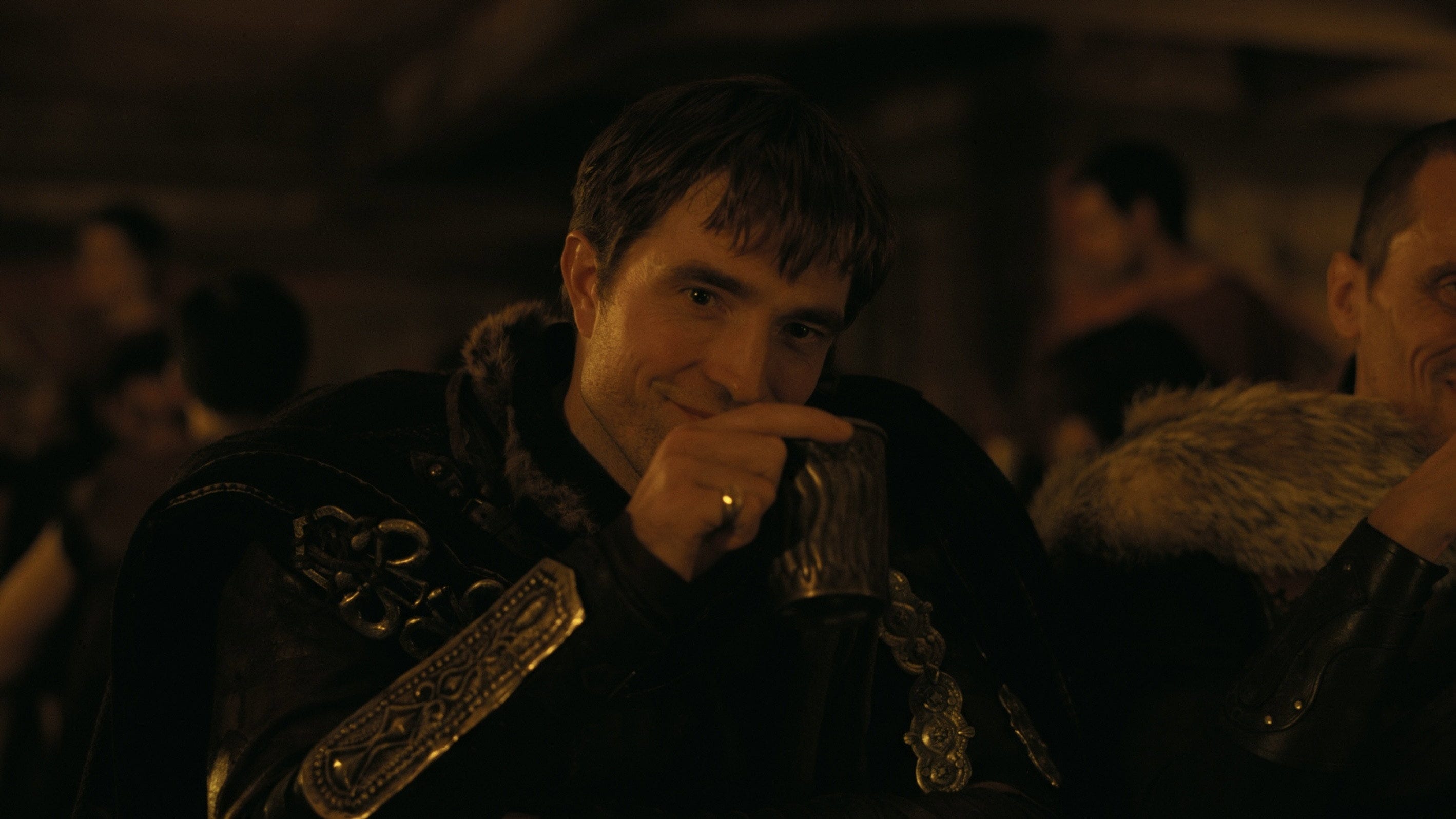
Formally, the use of IMAX cameras for every single shot of the film becomes an additional path to explore the intense use of perspective and thematic power of oral storytelling. Shooting with IMAX requires a massive amount of light; in the interiors of Odysseus’ kingdom in Ithaca, that does not match the vibe of a craven temple to excess. Focal points for the cameras become incredibly thin and decay upon the slightest movement. God bless the focus puller on this production because they do Zeus’ work constantly searching the frame for the “correct” depth of field. Faces being half in-focus and constant harsh pulls to and from different characters in the same frame creates a sensation of being in the presence of remarkable people where the textures of their face feel otherworldly. Early in the film during a conversation between Odysseus and Penelope, Odysseus is speaking and the camera just racks its focus entirely on Penelope’s reaction. She holds a weight that even contemporary technology must obey. This does lead to conversations becoming visually stale because there is a limiting factor to the placement and amount of light required to use these massive cameras for anything more than intense shallow focus.
This works in congruence with Jennifer Lame’s wholly unique editing style. Her work blends intensified continuity and discontinuity, two radically different styles of editing, to great effect. Every image in the Nolan films cut by Lame exists to convey story and a propulsive passage of time, but does so at times with disinterest in context. The head of Athena’s statue rolls multiple times throughout the film as a completely isolated image. The Odyssey flows like crashing waves, tearing away any defenses in its path as it washes over you. With Lame at the helm of the edit, Nolan’s films have become even more so about the image being presented in the current moment to the degree that The Odyssey verges on desensitization. The Laestrygonians cut down Odysseus’ warriors without a word of warning outside of a massive child letting out a blood-curling screech. This bloodshed plays out amongst an army of trees that seem to obey the armored giants, with Hoyte van Hoytema seemingly manipulating focal lengths and lenses to convey a sense of the trees gliding across the forest floor. It becomes almost nauseating at a point to see the quick-cutting images move not with fluidity but with brutality. Nolan’s oeuvre is immersion, and he largely accomplishes that.
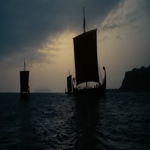
As a cohesive film however, The Odyssey is in direct conflict with the lyricism that makes Tenet and Oppenheimer so spectacular. There is a dedication to simplifying the material, akin to how Wilson’s translations of the Homeric epics are intended to provide a level of accessibility as per the oral tradition. Those two prior films are so eloquent in their deconstructions of genre and men because they are so unwieldy and alive. The Odyssey almost makes too much sense, finding success in convention and losing a bit of its soul in the process. The four-headed Hydra of Nolan x Lame x Hoytema x Göransson are undeniably gods at their craft, but The Odyssey does not extend beyond their reach. It absolutely stands out amongst a sea of frustratingly flaccid blockbusters, but it is restrained by its desire to be such a massive piece of spectacle. The scale of both the image and the set pieces are engrossing – see the shipwreck in IMAX for a 4D placebo. The Odyssey will most likely remain one of the best blockbusters of 2026, but that might suggest a fragility in mainstream cinema as much as it shows the unassailable might of the Nolan project.


